News · Tech

Dream Labs exits stealth with US$90M and Dream-1, a robot brain you rent by the hour

Dream Labs, founded by former leads of NVIDIA's GR00T robotics research, has raised a US$90 million seed round led by B Capital and opened a public API for Dream-1, a World Action Model it says can control two-armed robots it has never seen. It costs US$3 an hour, or US$2 for a lighter flash version.

Dream LabsRoboticsFoundation modelsWorld Action ModelsB CapitalFunding

Dream Labs has come out of stealth with a US$90 million seed round led by B Capital and a public API for Dream-1, a robot foundation model it says can drive robots it has never seen, on tasks it was never shown, from US$3 an hour[1][2].

The company was founded this year by former leads of NVIDIA's GR00T robotics research, the team that published DreamZero, the paper that introduced World Action Models, in February[1][2]. Kindred Ventures joined B Capital in the round, with A.Capital, Unusual Ventures, SV Angel, Wing VC, Scribble VC and Adrian Aoun also investing[2].

01 / 04

A robot brain as an API

Developers send Dream-1 camera images, the robot's current state and a plain-English task, and it returns the next 1.6 seconds of actions. Dream-1 costs US$3 an hour and a lighter Dream-1-flash costs US$2, which Dream Labs works out to about US$0.0013 per action for the full model[1]. The launch also includes a fine-tuning service for hardware the base model doesn't handle, and a Robot Playground where anyone with a browser can type commands to robots in the company's San Francisco office and watch them respond live[2].

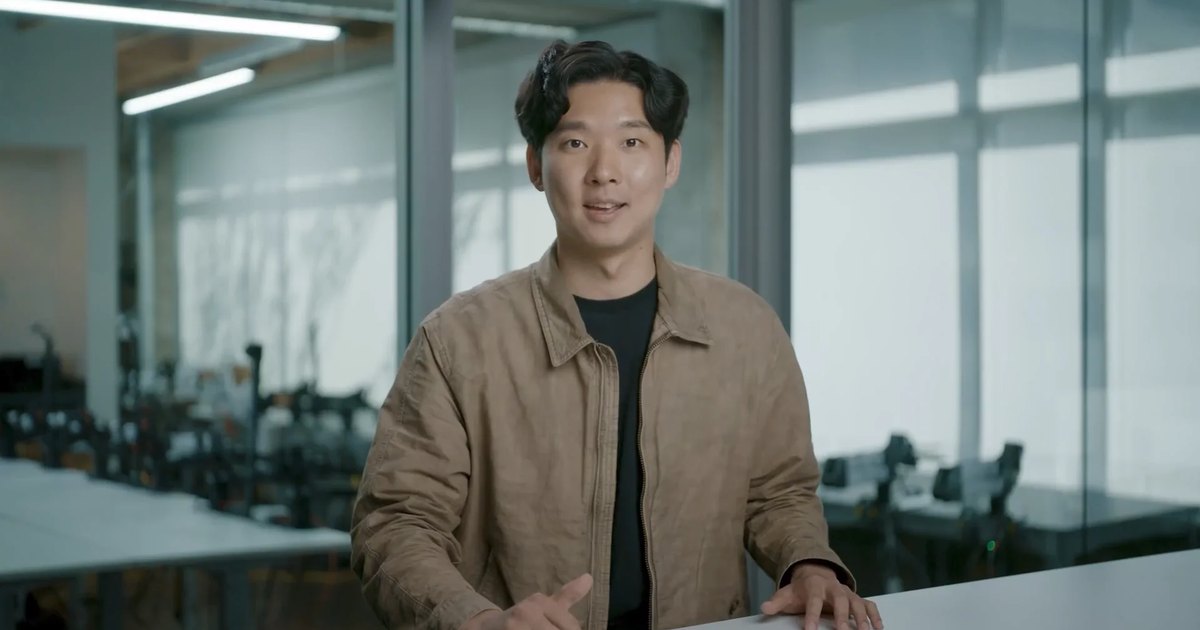
"When you get into a rental car, you don't relearn how to drive," co-founder and CEO Joel Jang said. "Dream-1 approaches a new robot the same way, so a new robot can do useful work in minutes, not months."[2]

02 / 04

Zero-shot on new bodies

The headline claim is generalising across hardware. Dream-1 predicts where each gripper should be rather than individual joint angles, so any two-armed robot with parallel grippers can use its own inverse kinematics to follow along. Because a World Action Model predicts video and actions together, Dream Labs argues, every robot looks the same to it: shapes moving through a camera's view[1]. The company says it controlled 27 unseen robots in simulation, from Franka and KUKA arms to the PR2 that Willow Garage released 18 years ago, with no data from those robots, and shows rollouts from beta testers including Hugging Face, Scale AI, KAIST and AgiBot[1].

Ahead of launch, Robocurve, a public benefit corporation that benchmarks robotics models, evaluated Dream-1 on its RoboDojo-RC Tier 1 test. Dream Labs says the report puts Dream-1 above general models such as Opus 5.5 and Gemini 4 Argon, at 16 times lower cost per attempt than Gemini 4 Argon and 1.7 times faster than GPT-6 Astra[1].
03 / 04

The fine print

Dream-1 is a research beta. Dream Labs says it will make mistakes, has not been validated for safety-critical use and should be tested in controlled settings, especially near people[1]. Zero-shot quality varies by robot and depends on each robot's kinematics solver, and fine-tuning still beats zero-shot: five minutes of a partner robot's own data visibly improved results, while a robot with dexterous hands needed 77 minutes[1]. Today it handles tabletop tasks such as pick-and-place and folding laundry; mobile robots and dexterous hands come later[2].

04 / 04

Why it matters

Robot arms have become cheap. Dream Labs counts a two-arm setup from about US$2,000 and says its 20-plus hardware partners sell robots costing roughly US$2,000 to US$10,000[1][2]. What those robots lack is software that works without months of task-specific training. If an hourly API can make a new robot useful on day one, it shifts robotics toward the model-as-a-service pattern that language models followed, and puts general robot control within reach of small teams and hobbyists, not just large labs.

FAQ

Questions, answered.

01

What is Dream Labs?

Dream Labs is a San Francisco robotics AI company founded in 2026 by former leads of NVIDIA's GR00T robotics research, the team behind the DreamZero paper that introduced World Action Models in February 2026. Joel Jang is co-founder and CEO. It came out of stealth on 19 October 2026 (US time).

02

Who funded it?

The US$90 million seed round was led by B Capital along with Kindred Ventures, with A.Capital, Unusual Ventures, SV Angel, Wing VC, Scribble VC and Adrian Aoun among the other investors. Dream Labs says the money goes mainly to compute.

03

What is a World Action Model?

A World Action Model learns to predict video and robot actions together. Dream Labs argues that because every robot appears to a camera as pixels, a model that can predict what a robot will look like completing a task can also produce the actions to get there, which is what lets it transfer across different hardware.

04

What can Dream-1 do today?

Dream-1 is a manipulation policy for two-armed robots with parallel grippers, handling tabletop tasks such as picking and placing objects and folding laundry. Dream Labs says it controlled 27 unseen robots in simulation without any data from them, including the 18-year-old PR2. Wheeled mobile robots and dexterous hands are planned. It is a research beta that has not been validated for safety-critical use.

05

How much does it cost and how do I try it?

The Dream API costs US$3 per hour for Dream-1 and US$2 per hour for Dream-1-flash. Each call returns 1.6 seconds of actions, about US$0.0013 per action for Dream-1. People without a robot can use a browser-based Robot Playground that drives real robots in Dream Labs' San Francisco office, and a fine-tuning service adapts the model to unsupported hardware from a small batch of demonstrations.