News · Tech
Path Robotics raises $300M at a $2.45B valuation for welding AI
Ohio's Path Robotics has raised US$300 million in a Series E led by Georgian at a US$2.45 billion post-money valuation. Its Obsidian welding model runs on cells used by HII and Lockheed Martin, and the money will push it into new factory tasks and robot types.
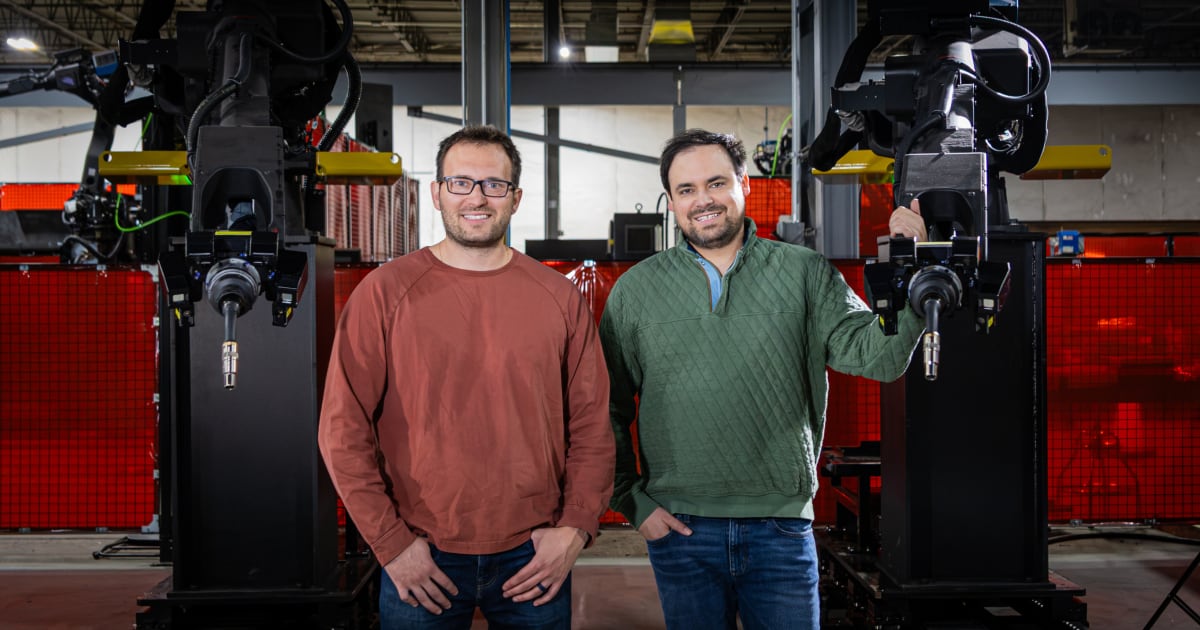
Path Robotics, a Columbus, Ohio company building physical AI for factories, has raised US$300 million in a Series E at a US$2.45 billion post-money valuation[1]. AI-focused growth investor Georgian led the round, with existing backers Addition, Drive Capital, IronArc Ventures, Tiger Global and Yamaha Motor Ventures joined by D. E. Shaw Ventures and NAVER Ventures[1]. Bloomberg reported the deal nearly quadruples the company's valuation[3].
01 / 04
Starting with welding
Path chose welding because it is one of the hardest factory jobs to automate. Traditional robots follow fixed paths, while Path's Obsidian model lets a cell identify weld joints, plan and execute welds and adjust as conditions change[1].
Georgian says Obsidian is trained inside a second model, the Weld World Model, a neural simulator built from tens of millions of welded inches of fleet and internal data. Data from every weld feeds back into it, and Path's internal tests show a first-pass yield above 97%, compared with roughly 70% to 85% for a human welder on the same complex, high-mix jobs[2].
"Our goal isn't to automate one step, but to automate the entire factory," CEO and co-founder Andy Lonsberry said[1].
02 / 04
Defence and shipbuilding demand
Annual recurring revenue has grown 17-fold in 18 months, and headcount is up 97% year on year with a target of 400 staff by year end[1]. Customers include HII, Lockheed Martin and autonomous vessel maker Saronic. Earlier this year Path signed a US$600 million performance-based production agreement with HII covering US Navy shipbuilding programs, which Georgian says runs over seven years[1][2].
03 / 04
Beyond the welding cell
The money will take Path into new manufacturing tasks and robot form factors, along with more compute and model training[1]. It has already shown Rove, which puts Obsidian on a quadruped robot so welding can happen in the field at the part. Lonsberry told Bloomberg the company also plans to expand into defence and energy infrastructure[3].
04 / 04
Why it matters
Path is one of the clearest examples of physical AI earning real revenue on production lines rather than in demos. Its pitch, that every deployed weld improves the model for the whole fleet, is the same data flywheel humanoid and warehouse robot makers are chasing, applied to a skilled trade facing a chronic labour shortage.
Sources
Sources for this story.
- Path Robotics Announces $300 Million Series E Financing at $2.45 Billion Valuation to Scale Physical AI for Manufacturing (Business Wire)businesswire.com
- Why We Invested in Path Robotics (Georgian)georgian.io
- Path Robotics raises $300m at a $2.45bn valuation for welding AI (The Next Web)thenextweb.com
FAQ
Frequently asked questions.
01How much did Path Robotics raise?
US$300 million in a Series E at a US$2.45 billion post-money valuation, led by Georgian. The company has now raised more than US$610 million since it was founded in 2018.
02Who else invested?
Existing investors Addition, Drive Capital, IronArc Ventures, Tiger Global and Yamaha Motor Ventures, plus new backers D. E. Shaw Ventures and NAVER Ventures. Georgian partner Emily Walsh joins the board.
03What does Path Robotics make?
Autonomous welding cells driven by Obsidian, a physical AI model that finds weld joints, plans welds and adapts in real time. It also launched Rove, a mobile welding system that puts Obsidian on a quadruped robot.
04Who are its customers?
Path names HII, Lockheed Martin and Saronic among large customers, alongside mid-sized manufacturers such as EK Machine, Millerbernd Manufacturing, TransAmerican Power Products and TYCROP.
05What will the money be used for?
Scaling deployments, expanding beyond welding into other manufacturing tasks and robot form factors, and more compute and model training.
That’s the story
Building with what’s new?
Spectrum Web Co ships products, places talent, builds social narratives and builds custom business tools as monthly services.
Related stories